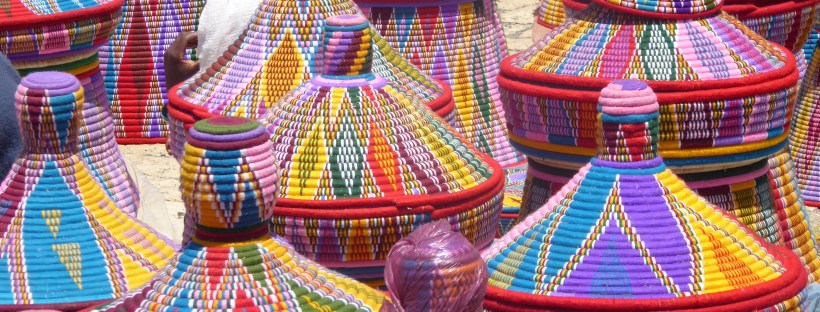
My first big travel blog is on a trip that truely left an impression on me. Last April took me to a round-trip in Ethiopia for 14 packed and lasting days. Ethiopia has been in the top three of my bucket list for a very long time and having had the pleasure to visit Japan, Ethiopia has been at the top ever since.
Unlike many globetrotters I did not go backpacking or took a very adventurous approach to it this time. Given the two week holiday limit with work, I opted for a guided tour and candidly did not regret a moment. Although everyone was 20 to 40+ years my senior, for this trip it just fitted well. I can imagine some raised eyebrows now… One of the top parts of this tour was the timing: orthodox Easter, meaning plenty and impressive processions and celebrations that add a lot of color that you’d otherwise miss. Due to the importance of religion in what we witnessed and visited, the teachings that are still thoroughly embedded in my fellow travelers, proved a massive source of cultural learning for me. I would not have had the same experience if I’d been in a group of similar people like me. One last thing, our guide from Davidsfonds (the organisation) was Katelijne Hermans, who used to be journalist and war correspondent for the Belgian TV. She spent a massive amount of time in Africa during many turbulent and tragic times. She on her own already provided us with a wealth of insights and experiences that we eagerly absorbed:)
Enough said, on to the trip! I first wrote down what we did during each day, but I also added some overall impressions of the country, (funny) anecdotes, …
Day 1: Addis Ababa // Day 2: Addis Ababa – Dire Dawa // Day 3: Dire Dawa – Harar // Day 4: Harar – Debre Zeit // Day 5: Debre Zeit – Addis Ababa // Day 6: Addis Ababa – Axum // Day 7: Axum // Day 8: Axum – Simien NP // Day 9: Simien NP – Gondar // Day 10: Gondar – Bahir Dar // Day 11-12: Bahir Dar – Lalibela // Day 13: Lalibela – Addis Ababa
Overall impressions, anecdotes, …
DAY 1 : Addis Ababa
After an uneventful flight via Paris we arrived at Addis Ababa (‘new flower’) in the morning. We dove right into it with a visit to the St George Cathedral where in 1930 Haile Selassie was crowned Emperor. Maybe you don’t know of him, but with him the Rastafari movement started;) (more on him and the Rastafari). Afterwards we went to the National Museum where (unfortunately but understandable) a replica of Lucys skeleton is guarded. Apart from the guide we got a first taste of the knowledge of the fellow travelers when one of us gave a very interesting expose on Lucy and where to situate here in history. Then something I really looked forward to was our first Ethiopian food: injera! 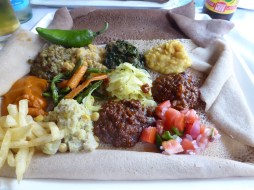 I’d say it’s something like an airy sour pancake, so don’t expect something sweet! On top go then the the veggies, sauces, meat/fish and you then tear the injera to scoop the food. Always a pleasure to eat with your hands:) Is it superfantastic…hmm, it was for sure a delight to have a change from the standard western fare. The stews etc can be very good so no discussion there. The injera itself can be a little less sour for me, although I’m sure that you get used to it:)
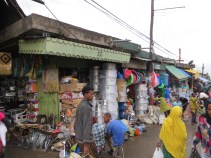 Afterwards we went for a long walk through the Mercato, the largest outdoor market in Africa and some say in the world. Stalls and shops packed with everything (non-luxury) you can imagine and that for kilometers on end. If it’s not new or 2nd hand they crafted something out of old material, taking recycling to a different level. At the sides of the street there were also plenty of people selling produce, where we could not imagine how far they probably had to travel to get there to sell a bag of 5kg of onions for example…You see people carry loads on their heads (jerry cans, wood, … ) so large that the sheer physics are baffling (ok, might be exagerating, but still, something you don’t see here…) As a Westerner you’re also not very used to see donkeys weave through cars and busses. It’s a pity how they are treated actually. Thankfully there is an organisation, Brooke, that is making a stance against this. During our time at the market we were guided by local ‘security agents’. Is it safe to wander around yourself alone, honestly no clue… But definitely go there when in Addis, true experience! Go back to top


DAY 2: Addis Ababa – Dire Dawa
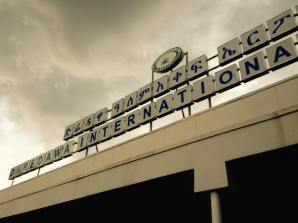 The next day got us back up in the air on a domestic short flight to Dire Dawa, closer to Djibouti and Somalia. Upon arrival I had the feeling that I took a step back in time and found myself in an outlying post at the outskirts of Africa. Low buildings spread over a large area, dry, -seemingly- not so many people, the tumbleweed would have completed the picture:) I do stand corrected as it’s the second most populous city in Ethiopia with about half a million inhabitants. I guess that the old train station did not really help to counter my perception: if I remember correctly, the French at the time constructed a single railroad line from Adis to Djibouti, their stronghold at the east coast of Africa.
Before going to the local Mercato we dropped by in the post office, where everything seemed a bit desolate. The offices apart from 1 were empty, boxes stored in the main hall, dusty (but with the arid nature outside understandable) and no lights. Then we realised that there was a power outage (or it was not the time of day for the power to be switched on for that part of town). It took a bit to find someone who could sell the post stamps and as there was no computer system they told us they did not know the value… also in Ethiopia the value is on the stamp… Discussions back and forth and you just have to follow the flow so it seemed. In the end no ill feelings towards the employees at all, let’s say the organisation and contingencies are a bit differently planned than let’s say in Switzerland. But everyone got the stamps, so off to the train museum. Short visit, some old school train wagons and a lively guide bringing the station once more to life (it’s not used anymore I think) once a tour… Afterwards back in the bus and on the way to the local Mercato. Although substantially smaller than the Addis one, nevertheless an eye-opener as to the qat that is grown heavily in that part of Ethiopia and then transported to mainly Jemen. The men chew this plant and this -apparently- has a drug effect and this was pretty obvious when we arrived. By the end of the afternoon quite some were lying at the side of the road with their stash of qat and chewing with a dazed gaze in their eyes. It was advised to stay in group, which is in any case always a good advice. The market itself was much more make-shift than the Addis one, even closer packed and children everywhere trying to sell anything they can offer. This was a scene that almost was the red thread throughout the visit. I’ll come back to that later… I saw a guy selling chicken and he was sitting together with the chicken inside the cage he built for it. Bit surreal all of it… Back to the hotel for a nights rest and on to day 3. Go back to top


Day 3: Dire Dawa – Harar
Early in the morning we headed to the Awodai qat market. As you can imagine, this market is for nothing else than qat. All the sellers were women, they took care of the business part. Add in a bit of rain, goats walking all around and the colorful clothing and we were all glad we could see and experience this. Oh yes, the guide told me the day before to wear long pants as it would not be a good idea to show my whitey legs in my shorts… so advice taken:) Back in the bus and on to Harar with its UNESCO World Heritage Site inner city and -depending who you ask- one of the holiest cities of Islam. Very colorful old town city, especially in the more quiet part to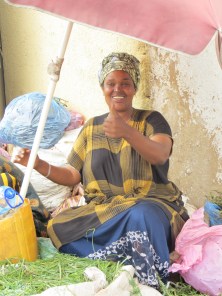 wards the Rimbaud house. If not mistaken there are 110 mosques present with some dating back more than 1’000 years. Lots of walking around, local markets, gazing at the inventive spirits of some using materials we would consider waste(d), soaking up the lively spirit of the people. One of the scenes I’ll probably never forget is when I saw a woman put four live chicken in a bag and walk away from the vendor as if it was the most normal thing. Well, obviously for them it is. In the end -and not really a surprise- most people do not have a refridgerator to store their food, so it has to be fresh just before consumption. Still, a bit weird and funny when you see it for the first time. And also a small indication of why enabling electricity to people can help raise the living standard and aid economic development.
In the evening we went to a typical tourist attraction: the feeding of the hyenas. Where this used to be at one of the gates of the old inner city walls, this is now moved to a place more away from town. The story goes that these hyenas venture every evening out of the wild and are treated by the same family since ages. Bon, it’s good folkore in my opinion and for me it’s the first time I see hyenas in the (semi)wild. Myself I took the opportunity to sit next to the one feeding them while he had one lean on me and eat a piece of meat next to my head. Obviously they are trained, but I was amazed how heavy that bad boy was and feeling them leaning on your back and hear them breath next to your ear, special:) Go back to top


DAY 4: Harar – Debre Zeit (Bishoftu)
The next day was a travel day: 450km and the roads are not what we are used to… However, our guide let us know that compared to a few years ago a lot actually had changed and a lot of construction was going on. The government is aided in this by for example China. Where we sometimes saw near-accidents or near suicidal driving styles, we apparently were still on the safe side as we were driving during the day. A lot of traffic would take place during the night and there is no public lighting… In the end arrived in Debre Zeit (or Bishoftu as it now seems to be called).
DAY 5: Debre Zeit – Addis Ababa
Breakfast brought a nice surprise as the hotel was located at the rim of one of the crater lakes. Before heading back to Addis by bus, we went for a walk around the lake. And then we were back in Addis with two sights on the program for the afternoon: the Ethnologic Museum and the Holy Trinity Cathedral. In the latter we could see the tomb of above mentioned Emperor Haile Selassie and outside in the graveyard the grave of suffragette Sylvia Pankhurst. Remarkable woman… The churches in general are pretty different than the ones used to here, be it protestant or catholic. In this case, it was pretty pale in decoration (although we would see later on churches filled to the brim with paintings). Also the shape in octagon (correct me if I’m wrong here) with three circles inside, depending on whether you’re a ‘normal’ person, a cleric, … Go back to top


DAY 6: Addis Ababa – Axum
The next day brought us to Axum where people from all across the country had been gathering for the Palm Sunday celebrations. Packed in white robes clad droves of pilgrims it added a magical touch to this place, that has been designated as World Heritage Site since the early ’80s. Not to sound negative, but if you go there on a normal day, the allure will be a lot less. With Lalibella I find this different. But in any case, a lot of people, a lot of color and we already saw the first large procession. Careful for pickpockets (unfortunately there as well)… So we’re sitting in the bright sun next to a tree where they built a big stage where among others the patriarch etc would be leading the ceremony. In front of the stage where then the traditional dance rituals which were followed by speeches, bible quotes etc. Afterwards you could give a donation and this would then be used for charity if not mistaken and in return they called out your name and thanked you.After a pretty exhausting day we went back to the hotel, had some food and called it a night. Go back to top


DAY 7: Axum
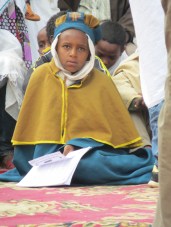 In the morning we were treated to witness on the front row the Palm Sunday procession adjacent to the Cathedral of Our Lady Mary of Zion, built by Emperor Selassie in the ’50s. Again everyone in white except for the dignitaries and participants in the procession. Very colorful bunch! What was funny, but very positively meant, was to see some of the elderly dignitaries walk around on sneakers, some people holding umbrellas where the ‘stick’/handle has been taken from beach umbrellas. I refer again to the ingenuity of recycling and creating something from materials that we consider wasted.
After this, we headed to the monolithic stelae. Constructed probably over 1’500+ years ago, these bad boys continue to stand at 20-25m tall and over 100 tonnes. Some are not monolithic anymore after having been taken by the Italians during the war and subsequent repatritation.
As small intermezzo: you see regularly references to the Italian war and the subsequent independence fights. One -positive- legacy of the occupation is the food:) Pasta, pizza, … seemed to be ingrained, something I guess you wouldn’t see in neighbouring countries. I can’t remember the exact day, but on one of the days we were waiting in the departure hall for a domestic flight. A few tables next to us are two locals and one orders a spaghetti dish. They bring and no knife (thank god…), no spoon… and no fork:) The guy started eating with his hand, first grabbing/moulding as you would with a fork and then eat:) First time I’ve seen someone eat pasta with their hands.
Bon, after the stelae we went to visit the Cathedral which is basically a big circular hall, bright wall paintings all around. Some of the pilgrims sleeping (praying?). Then a local cleric showed us an old manuscript (few hundred years old we were told) with very nice paintings. Astonishing it was covered by several blankets to protect against the light, whereas in places as Europe this would be kept in a vault or behind glass. Next to the cathedral is maybe the most famous building of Axum: the Chapel of the Tablet at the Church of Our Lady of Zion. Legend (or truth depending who you ask) has it that the Queen of Sheba (who was from Ethiopia;)) visited King Solomon in Jeruzalem back in the day. Cunning Solomon then famously tricked her into bed and out of this was born Menelek. The prince one day brought/stole the Arc of the Covenant to Ethiopia. And the place where it since kept is this chapel. No one, except one, can enter this sacred place, not even the emperor. If you’re more interested in the Queen of Sheba story, a good start is the Ethiopian section of this link. Then the men in our company went to visit the church itself, which boasted a few floor-to-ceiling wall paintings of byblical scenes. God knows why women are not allowed…
With the sun burning down on us all day and soaking up all of this history, we went back to the hotel for the dinner and a good night sleep. Go back to top


DAY 8: Axum – Simien National Park
The following day we left Axum behind us and went on the 300km-ish drive to Simien NP. This national park became listed as UNESCO World Heritage already in 1978 and is a sanctuary for some very species only found there: the Geladan baboon, the extremely rare Simien fox and the Walia ibex. The fox and ibex we did not see, though on the light walks we did that day and the next morning we did get to see plenty of the baboon. It looked like we were more amazed to have them at a meters distance than they were about us.
The scenery was gorgeous and with almost no one around it would make a great place for hikers. So if you want a change from the -great- Swiss Alps, think about Simien;)


The drive itself was pretty uneventful. With the aid of the Chinese gov’t and its companies the Ethiopian gov’t is expanding its road/highway network. This has reduced travel time a lot since only a few years ago. There is still a long way to go (pun intended), but it’s also a massive country. As you can imagine the roads are not provided with lighting at dark and people tend to interpret traffic guidelines/rules ‘interestingly’. One of the influences of the Chinese investments etc are the red trucks (made in CH) that you see everywhere. As apparently the safeworthiness of these vehicles are questioned by the locals due to the large amount of accidents (we’ve seen a few ourselves), the trucks got the nickname ‘Red Terror’. In Ethiopia the expression Red Terror also refers to the bloody purgings under Megistu when he took control of the Derg and Ethiopia in ’77. Estimates of casualties range from several tens of thousands to hundreds of thousands. Go back to top
DAY 9: Simien NP – Gondar
As mentioned, we went for a short hike to get to see some baboons an did we. It was funny to see that the little ones are as playful and mischievous as our kids are. No difference there:) At one point one, what we guessed was the alpha male, started to hump another one in plain view of everyone. No shame!:)
Then back into the bus to Gondar (and no, that’s not the LOTR place…:)). Founded in the 17th century, the main draw for us are the castles. To be candid, it’s something you wouldn’t expect in this part of the world. A bit away from the castles is the emperor’s private retreat, Fasilides’ Bath, a building in the middle of a pool. Why care you probably think now. Well, every year this pool is filled with water for baptising rituals during the Timkat festival. Our guide told us that she visited that once and that in order to fill the pool, all the water from the city was shut off. Priorities;) Go back to top


DAY 10: Gondar – Bahir Dar
On the 10th day we went to Bahir Dar and for a boat trip on and Lake Tana, the source of the Blue Nile. The first visit on the program were the Blue Nile Falls. Unfortunately we had a spell of drought behind us and the otherwise -apparently- impressive waterfall was reduced to a small one. It is what it is, so on to Lake Tana and one of its islands to visit the church of Ura Kidane-Mihret, a 500 year old church in an even older convent. Again the same circular building shape with the three circles inside. Very colorful mural paintings as you’ll see across Ethiopia. After an hour long trip on the boat soaking in the sun we arrived back in Bahir Dar for a good night rest.


In the end it matched what we experienced before and would after, but it’s one aspect that kept surprising us. Not in a negative way, just like: ‘oh well, can’t imagine this at home…’ So we got our rooms, wanted to freshen up before hitting dinner. Extremely small stream of water from the tap. Ok… so we try the shower, which looked fancy-pany with jet streams etc. I would not be surprised if you could play the radio at the same time. No water… Toilet then: very small stream of water. So we go to the lobby and we say guys, there is no water, could we get a different room. One of the ladies goes back with us to check, very friendly. So she opens the tap and with the water that was almost dripping instead of running she genuinely told us that she was confused as we have water. Then she tried the toilet with the same question mark in her eyes. When we told her that most likely it would take a whole night to fill the toilet, it was two different worlds. Then you realise how well we have it on those basics. So we got a different room in the end and were very happy with our old worn shower cap with 2 streams of water jetting out. Freshened up, on to dinner. Go back to top
DAY 11-12: Bahir Dar – Lalibela
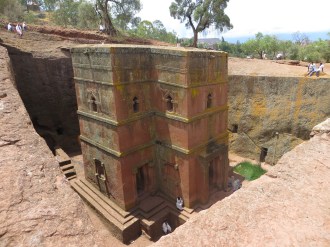 On to the airport and on the way to -for me the highlight of the tour- the churches of Lalibela! It is believed that in late 12th, early 13th century the then ruler Gebre Mesqel Lalibela wanted to shape the -later- Lalibela to the image of Jerusalem. Apart from the many references, it has left us with an astonishing complex of churches carved into the rocks (rightfully recognised as World Heritage Site). Our 2 day visit took us to al the churches, starting with the Northern Group, followed by the Eastern one and the uberfamous Church of St George. Let me say that the shortness of what I write here is inversely proportional of the impressions left behind. Especially being there with Good Friday and witnessing the pilgrimage, celebrations and ceremonies provided many memories. Personally, the outside of the churches are the main attraction as the inside space is -not unsurprisingly- small. Packed with people, which I liked as it added to a very vibrant reverence. I can only say, go there and just let it soak in:)


Oh yes, on the morning of the second day we visited as well the monastery of Ashetan Maryam with the church of Yimrehane Kristos. Located about 17 km outside of Lalibela and estimated to be constructed around the 11th century AD, it is largely built into a big cave: strange but interesting sight to behold. As with all the other celebrations we’ve visited, also here the men and women were separated. Go back to top


DAY 13: Lalibela – Addis Ababa
Before flying back to Addis, we visited the Easter market, however, not much to say about this: a lot of people, goats, …


The flight back to Addis was smooth and in the end we settled in for lunch and some refreshing before heading to the airport for the flight back home. The airport… well, if you’re looking for a place to sit before going through security to the gates, good luck:) After we realised that, we got into the security queue which took over an hour easily. Once we arrived at the actual check, we started to understand why… There was 1 woman checking the monitor and two men at the baggage belt with one at the beginning, where you’d expect to be asked if you have any liquids, laptops etc. So one or two persons in front of us had to have his bag checked. Turned that the woman had to take the bag and search it, leaving the monitor unmanned, the belt stopped and everyone waiting. The two men just kept standing there, maybe overlooking nobody would jump queue? Go back to top
Overall impressions, anecdotes, …
I hope that the above diary has given a little flavour of what Ethiopia can offer. Apart from the historic landmarks, the nature/landscape and the Easter celebrations, it was the differences with what I call home (the Western world) that at least had the same impact. I know it sounds so obvious that mentalities, views and expectations are different all over the world and they are, but still, I did not expect the extent of it.
What struck me is the amount of children in even the most remote places. When we stopped with our bus in the middle of nowhere, no one to be seen and 1 minute later, there would children around us, trying to sell us souvenirs. Apparently almost half of the population is younger than 14 years old and I would not be surprised to see those numbers correct. What we understood is that the eductional system is still in full development in the urban areas, let alone in the rural ones. Although it is mandatory to send your kids to school until a certain age, the enforceability of it could questioned… It’s always saddening when children cannot get the opportunities to develop themselves and their skills due to lack of infrastructure. And then you get to the conundrum of buying the souvenirs from them: on one hand it provides them with means that maybe could be more than what they’d earn having gone to college. On the other hand, it keeps them off the school benches which is ideally not what you want… We understood as well that the larger size of families is also a way of ensuring caretaking for the parents when they get older. There isn’t a pension and social security scheme in place as in Europe for example. This obviously also has its consequences. Soit, it is not my intention to start advocating, but these thoughts are entwined with what we saw and experienced throughout the trip.
On a lighter note, it was very interesting to see the difference in concept of time, task completion etc. If you’d keep to your own – prejudiced in a way – standards, you might frustrate yourself. Or you could go with the flow… One small example, we’re in the hotel in Dire Dawa, I’m in the bathroom and I see the mirror and the power socket. But the power socket was installed half behind the mirror…
Another anecdote was in Bahar Dar, we just arrived in the evening to the hotel, we check in into the rooms and out of experience from earlier days we check if there is water. We were surprised with the shower as it was a big cabin, with side sprayers, it looked relatively so high tech that I would have expected radio to play on voice command. But then: shower, toilet and washing table: a very very small stream of water from each, well, ‘stream’ is a big word, but no droplets either:) So we go back to the reception and someone joins us back to the room. She checks and sees the same and looks at us with a questioning look as if where the issue was. ‘Well, there is no water to shower or it takes 5 min to cover your hands in the washing table. And then, well, the toilet, how to flush if it takes a few hours to fill again?’ You saw she still did not see the issue, but nonetheless took us to another room, with a fantastic makeshift shower, with 3 small but strong jets of water. That felt like heaven:)
As a last one, not to bore you, at the airport in -if I remember correctly- Axum. We go through the security check before entering the departure hall. I go through the metal detector, no beep and a woman officer takes me aside. She scans me with a manual detector, again no beep, and asks: ‘so where is it?’ ‘sorry, what do you mean, all my metal items are in the scan.’ She scans again, no beep and asks: ‘Where is the metal?’ Bon, we go through and then sit ourselves down in some chairs in the same hall (there were like 5 flights that day) and then noticed behind us a large door fully wide open to the outside. No guards or anything. It seemed you could just walk in and out of the airport:) Not that we tried, so maybe the vigilance was more than what we expected at that moment;)
Thanks for sticking with me til the end of my first long travel blog. Hope you liked it. Do feel free to comment or ask questions!
Happy travels!
 food for travelers